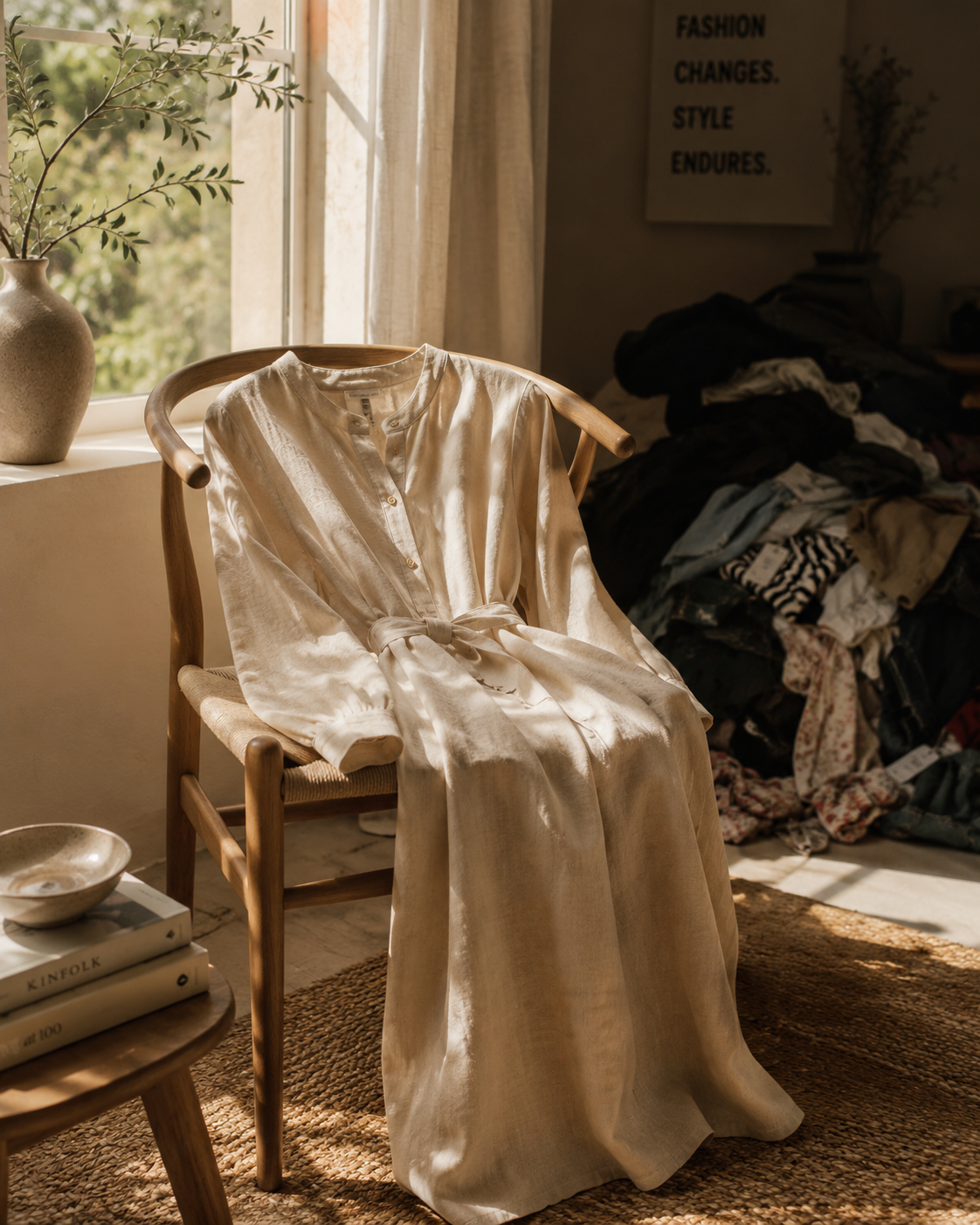
Picture this: you’re standing in front of your closet, a sea of clothes staring back at you, and yet the all-too-familiar feeling washes over — “I’ve got nothing to wear.” Sound familiar? It leads to inevitable internal debates about spending more money on more clothes, only to repeat the cycle. Let’s hit pause on that thought. Today, we’re diving into why those tempting, low-price tags on fast fashion might hurt more than help, and how to make thoughtful choices that truly enrich your wardrobe.
The Hidden Costs of Fast Fashion
1. The Allure of the Sale Rack
We’ve all experienced it — that euphoric rush when we find a cute top or pair of jeans at a jaw-dropping discount. But here’s the kicker: more often than not, these items end up sitting unworn and unloved. Why? The material is uncomfortable, the fit is off, or it just doesn’t stand the test of time. Fast fashion tricks us into believing we’re getting more for less, but in reality, we’re only fueling a never-ending cycle of buying and discarding.
Take my friend Mia, for example, who swore by her weekend shopping sprees. Until one day, she did the math and realized her closet was filled with $10 shirts — money she could have invested in pieces that lasted. It’s not just about the initial joy of purchase; it’s about long-term satisfaction.
Quality Over Quantity: Choosing the Right Materials
2. Embracing Natural Fabrics
Here’s a personal revelation: once you start leaning towards natural fabrics, your style takes a turn for the better. Fabrics like linen, cotton, and wool not only breathe well and feel sublime against the skin but also last when cared for properly. Unlike synthetic fabrics that participate in the fast-fashion game, these materials age gracefully without losing their appeal.
Consider a grandmother’s wool cardigan, kept for over 20 years — as snug and inviting as the day it was first worn. Natural materials have stories woven into every thread. When you choose quality over cheap thrills, you’re buying into a legacy, not just an item.
Think of it this way: a well-made linen shirt that lasts ten years and costs £80 is far better value than four $20 synthetic tops replaced every two years.
3. The Upkeep of Your Wardrobe: Natural’s Friendly Side
Natural fabrics aren’t just long-lasting; they’re often easier to care for. Cotton tees barely ask for more than a gentle wash, and a linen dress seems to grow more charming with each wear. On the other hand, synthetic fabrics can lose their shape and vibrancy after just a few washes, making even an inexpensive item costly in terms of maintenance and replacement.
Daniela switched to a sustainable wardrobe a few years ago and discovered the joy of linen’s cool comfort in summer, the warmth of wool in winter, and the versatility of cotton anytime. Her clothes have become faithful companions rather than transient trends, offering both wear and narrative.
Investing Today to Save Tomorrow
4. Cost Per Wear: A New Perspective
Let’s talk numbers — specifically, the concept of “cost per wear.” It’s a simple formula: take the price of an item and divide it by the number of times you’ll likely wear it. The lower the number, the smarter the investment.
A cotton dress worn once a week costs a fraction per wear compared to a clearance sweatshirt used twice and forgotten. It’s almost a badge of honor — knowing you made a thoughtful choice that resonates with your values and lifestyle over time.
It’s enlightening, perhaps shocking, when you realize that the dress you splurge on actually costs less per wear than the impulse buy hanging untouched in your closet.
The Bigger Picture: Mindful Consumption
5. Beyond the Fabric: What Are We Really Buying?
When we choose fast fashion, we’re often buying into a fleeting moment of style satisfaction. But mindful consumption with an eye for quality doesn’t just enhance our closets — it promotes a shift in the fashion industry towards more sustainable practices.
Choosing high-quality, natural fabrics is a small step that contributes to a bigger cause — reducing waste, respecting labour, and treading lightly on our planet. It transforms the narrative from “nothing to wear” to “everything tells a story.”
Conclusion: Crafting a Wardrobe That Matters
Making the shift from quantity to quality in fashion is not just an economic decision; it’s an emotional and ethical one. It’s about valuing what you have, choosing garments that reflect who you are, and recognising that the best investments are often those closest to our skin and hearts.
So next time you’re faced with the allure of a quick buy, pause and consider the journey of each fabric. It’s about more than just filling your closet — it’s about finding joy in what you already own and welcoming new pieces that complement your treasured collection. This approach doesn’t just clothe us; it defines us, weaving tales we’ll come to cherish.
And trust me, the next time you stand in front of that closet, you’ll smile, knowing that you, indeed, have plenty to wear.