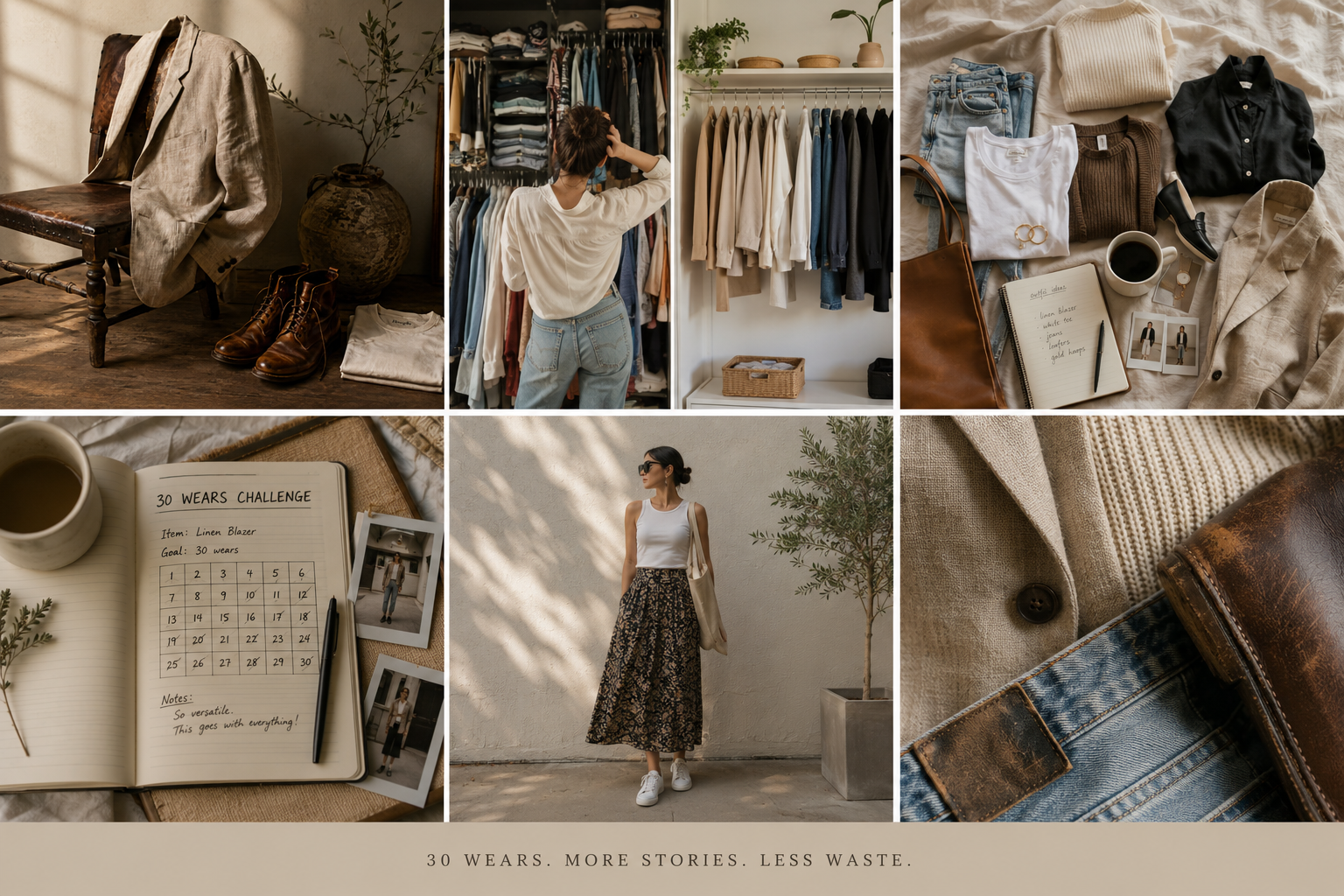
We've all been there — that moment when we stare at our overflowing closet and think, I have nothing to wear. It's a contradiction we live with daily, but what if the problem isn't about the quantity of clothes we own but how we use them? Enter the 30 Wears Challenge, a simple concept with the power to transform your wardrobe, your mindset, and even your impact on the planet.
This challenge isn't about buying more — it's about making more of what you already have. And the best part? It's incredibly doable, even for those of us who've been stuck in cycles of impulse shopping or uninspired outfits. Ready to dive in?
What Exactly Is the 30 Wears Challenge?
At its core, the 30 Wears Challenge prompts you to rethink everything about how you consume fashion. The idea began with sustainable fashion advocate Livia Firth, proposing a simple metric: before buying a new item, ask yourself, Will I wear this at least 30 times?
Think about it — a top worn 5 times might seem nice to have, but its cost per wear skyrockets compared to something you've reached for 30 or even 50 times. And this isn't just about money; it's a small but mighty step toward slowing down fast fashion's churn-and-burn cycle. With so much clothing unnecessarily ending up in landfills, focusing on longevity is a move that benefits both your wardrobe and the planet.
But here's the twist: this challenge isn't just for new purchases. It's also a creative way to explore the clothes you already own. Could that forgotten jacket or those "meh" pants make it to 30 wears? Think of it as a scavenger hunt for your closet — a chance to rediscover hidden gems and rethink how you use your favorites.
Why 30 Wears Might Be Harder (and Better) Than It Sounds
At first glance, 30 wears might feel easy. You already wear your trusted staples — those perfectly faded jeans, the soft-as-butter tee — more times than you can count, right? But what about the other 80% of your wardrobe — the statement pieces you adore but rarely touch, or the "whatever" items you bought on sale and promptly forgot?
The challenge forces you to confront pieces that don't pull their weight. Why have you been neglecting that blazer? Does your party dress deserve more casual outings? It's not about guilt — it's about curiosity. You'll start seeing your clothes less as passing trends and more as long-term companions.
The truth? You might struggle to hit 30 wears for some items, and that's okay. That tension is part of what makes this challenge so effective. As you face those moments, you start making sharper, more intentional decisions about what belongs in your wardrobe moving forward — and what doesn't.
Getting To 30: Creative Ways To Wear What You Already Own
Ready to tackle the challenge? Here's how you can breathe fresh life into your wardrobe without buying anything:
1. Remix Your Basics
Your everyday staples don't have to be boring, even if they feel predictable. Try layering a graphic tee under a slip dress, or throw your same cozy cardigan over a sleek cropped top instead of a predictable button-down. Basics are versatile by nature, and pushing to 30 wears might mean pushing your styling boundaries.
Reflect: Are you falling back on the same safe combos? What's one new way you could wear your go-to jeans or neutral sweater this week?
2. Spotlight the Lesser-Worn
That bold patterned skirt? The one that always feels too "extra" for daily life? Give it a chance to shine paired with simple basics. Closet orphans — pieces that rarely see daylight — can often become your most interesting outfits when they're toned down with casual pairings.
Pro tip: Commit to wearing one of your lesser-worn items at least twice this week. Find a way to make them outfit-ready, even for mundane moments. Sometimes, confidence comes after you step out the door.
3. Accessorize Like a Pro
Accessories might be your secret weapon to keeping things fresh. A scarf tied differently, chunky earrings worn with a minimalist dress, or a bold belt can transform how a piece feels day-to-day. Don't underestimate the power of small tweaks — they're perfect for getting more wears out of items that feel like they've "been there, done that."
Extra credit: swap accessories as seasons shift. That lightweight bomber jacket takes on new life when layered with a chunky knit scarf and ankle boots for fall.
4. Borrow Inspiration (Even From Yourself!)
Sometimes, the answer is staring you in the face. Ever scrolled back through your own photo archives and thought, Wait, that outfit was amazing — why don't I wear that anymore? Give yourself permission to repeat stellar looks from the past. It's not redundant — it's smart. Alternatively, hit Pinterest or style blogs for outfit formulas featuring items similar to what you already own.
A Wardrobe Mindset Shift
The beauty of the 30 Wears Challenge isn't just the creative outfits — it's the mindset shift it sparks. You start approaching clothes with deeper appreciation, less impulse, and more resourcefulness. Instead of chasing "new," you chase the newness within: new combinations, new ways of wearing, new reasons to love what's already yours.
It's refreshing, isn't it? To move away from clothes as disposable trends and toward styles as something enduring. With every wear, there's a story to tell, even if it's as simple as This sweatshirt has been my hero through lazy mornings and messy brunches.
Reflecting on Your #30Wears Journey
What happens when you've hit 30 wears for an item? You might find you love it more than ever — an MVP of your wardrobe that justifies its place for years to come. Or maybe you'll realize it wasn't worth the effort or didn't fit your life the way you thought. Either result is valuable; it guides the way you curate your closet in the future.
So, whether you're just stepping into this challenge or already eyeing your favorite pieces with fresh creativity, remember this: every wear counts. The more you savor what you already have, the less you'll feel the tug of unnecessary trends.
Let's make 30 wears (and beyond) the new standard. After all, our best wardrobes are already waiting for us — they've just been hiding in plain sight.